
Finding Your Way Back to Each Other With Couples Therapy in Plano
Many couples walk into therapy feeling emotionally drained. They still care about each other, but conversations turn into arguments faster than they expect. Many couples tell me they reach a moment where they think, “How did we get here? We used to feel so close.” Over time, partners may quietly start wondering whether they are drifting too far apart, even though they still care deeply about each other.
Working with a couples therapist in Plano, TX, often begins at this point, when partners realize that repeating the same conflict is not bringing them closer to resolution. Instead, it often creates more distance and emotional frustration.
In my work with couples at Melodie Alexander Counseling, I often remind people that most relationship struggles are not about a lack of love. They are usually about feeling unseen, unheard, or emotionally disconnected. Therapy helps partners slow down these patterns and rediscover the connection that once felt natural.
If you and your partner feel stuck in the same cycles, this article will help you understand how relationship therapy works and how it can support meaningful change.
Key Takeaways
Relationship conflict is often driven by emotional patterns rather than the surface problem.
Couples therapy helps partners understand how attachment needs influence behavior.
Evidence-based approaches like Emotionally Focused Therapy can improve connection.
Many couples regain closeness once they recognize their negative interaction cycles.
Rebuilding a relationship takes openness, patience, and a willingness to grow together.
Why Many Couples Feel Stuck in the Same Arguments
When couples first come to couples counseling, they often say they keep having the same disagreement over and over again. The topic may change, money, parenting, or household responsibilities, but the emotional outcome stays the same.
You or your partner may often leave these conversations feeling frustrated, defensive, or emotionally shut down.
Research from the Gottman Institute suggests that 69% of relationship conflicts are actually ongoing issues rather than problems that can be fully solved. In many relationships, disagreements are rarely about one small moment. Often, they reflect deeper emotional patterns that partners may not even realize are shaping their reactions.
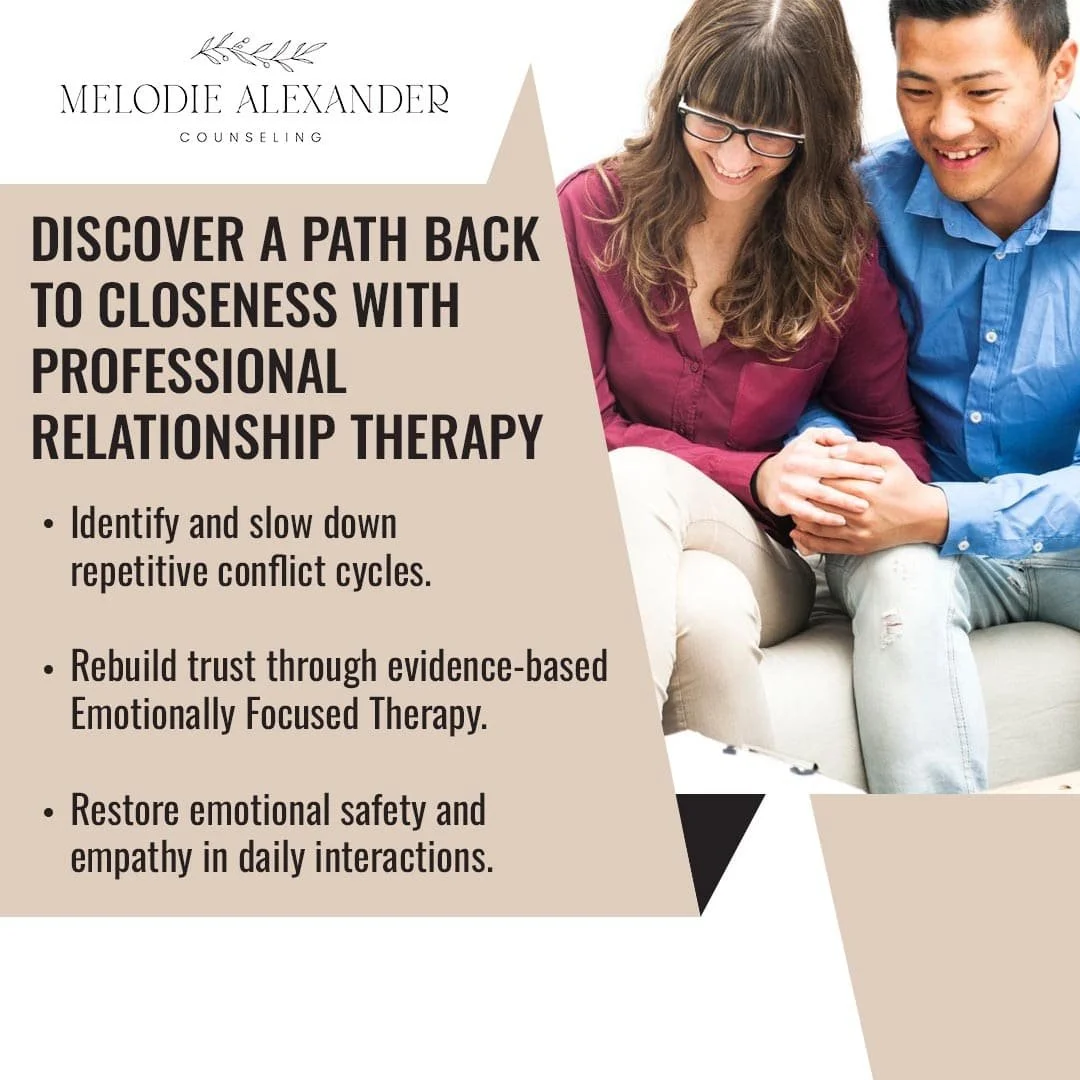
The Negative Cycle That Develops Over Time
Consider a common scenario.
Sarah feels lonely because her partner, Mark, spends long hours working and rarely initiates conversation about their relationship. When she brings up the issue, Mark feels criticized and shuts down. Sarah becomes more frustrated and pushes harder for answers.
The more she pursues conversation, the more he withdraws.
Unfortunately, this kind of cycle can continue for years if no one pauses to look at what is really happening. Both partners feel misunderstood, even though both are trying to protect themselves emotionally. Many couples are surprised to realize that the arguments they have been having for years often come from this same pattern.
In couples therapy services at Melodie Alexander Counseling, recognizing this cycle becomes the first breakthrough. Once partners see the pattern clearly, they begin working together to change it.
When Conflict Turns Into Emotional Distance
Over time, unresolved tension can lead couples to feel more like roommates than romantic partners.
Many partners describe feelings such as:
frustration with repeated misunderstandings
confusion about why communication feels harder
loneliness within the relationship
As the counseling notes explain, when connection breaks down, “everything in your life feels harder.”
This is often the moment when couples begin exploring couples counseling in Plano as a way to reconnect.
The Emotional Needs That Shape Our Relationships
Most couples believe their struggles come from communication problems. Communication matters, but the deeper issue often involves emotional safety.
Human beings are deeply wired for connection. Psychologists describe this as attachment, our deep need to feel safe, supported, and emotionally connected to the people we love.
Why Attachment Matters in Adult Relationships
Attachment theory explains that people feel calmer and more resilient when they know their partner is emotionally available.
When that connection feels threatened, the brain reacts quickly. Even small disagreements can trigger strong emotions.
Emotionally Focused Therapy, commonly used in couples therapy, focuses on restoring this sense of emotional safety.
A large meta-analysis found that about 70% of couples were symptom-free by the end of treatment, and many continued experiencing those improvements long after therapy ended (Spengler, Lee, Wiebe, & Wittenborn, 2024).
A Hypothetical Example of Emotional Misunderstanding
Imagine David and Elena, a couple married for ten years.
David tends to withdraw when conversations become emotional. Elena, however, seeks reassurance and connection during difficult moments. When Elena asks questions about their relationship, David feels pressured and retreats. Elena interprets his silence as indifference, which only increases her anxiety.
In therapy, you and your partner may begin to realize that both of your reactions often come from places of vulnerability rather than hostility. David withdraws to protect himself from conflict. Elena pursues conversation because she fears emotional distance.
Once couples recognize this dynamic, they often develop greater empathy for each other.
What Happens During Couples Therapy Sessions
For many couples, the idea of starting therapy can feel intimidating. Some couples worry the therapist will take sides or judge their relationship.
In reality, the goal of our relationship therapy services at Melodie Alexander Counseling is to help both partners feel heard while understanding the emotional patterns affecting their connection.
The First Session: Understanding Your Story
The first session focuses on listening. Each partner shares their perspective on the relationship and what led them to seek support.
Sometimes, couples arrive with very different experiences. One partner may feel lonely, while the other feels criticized or overwhelmed.
Exploring these perspectives helps both partners begin understanding how their relationship dynamic developed.
Individual Conversations for Deeper Insight
After the initial session, each partner may meet individually with the therapist. These meetings help explore attachment history and emotional coping patterns.
Understanding how past experiences shape relationship behavior often leads to powerful insight.
For example, someone who grew up in a home where conflict was avoided may withdraw during disagreements. Another partner who experienced emotional neglect may push harder for reassurance.
Recognizing these influences can help you and your partner understand each other with greater compassion.
Rebuilding Connection Through New Communication Patterns
Once the negative cycle becomes clear, therapy focuses on creating new ways of interacting.
Partners learn to express emotional needs in ways that invite connection rather than defensiveness.
Instead of saying: “You never listen to me.”, a partner might say: “I feel lonely when we don’t talk about what’s really going on between us.”
This shift may seem small, but it can make a meaningful difference in how partners respond to each other.
Through guided conversations and couples therapy, many couples rediscover a sense of emotional closeness that had been missing.
When Couples Benefit Most From Therapy
Some couples wait years before seeking help. Others reach out as soon as they notice their relationship feeling strained.
Either approach can lead to growth through couples therapy in Plano, but certain situations often bring partners to therapy.
Repeated Conflict That Feels Impossible to Resolve
When arguments happen regularly without progress, it usually means the deeper emotional needs remain unspoken.
Therapy helps partners identify those underlying concerns and learn healthier ways to communicate them.
Support during these moments can prevent temporary tension from becoming long-term disconnection.
Rebuilding Trust After Hurt or Betrayal
Trust can be deeply shaken by many experiences, including secrecy, infidelity, or long periods of emotional distance. When this happens, couples often feel unsure about how to move forward or whether healing is even possible.
In therapy, we create space for both partners to speak honestly about what happened and how it affected them. These conversations are not always easy, but they are often the beginning of real healing.
Over time, couples learn how to rebuild emotional safety step by step. With patience, accountability, and support, many partners begin to rediscover the trust and connection they once thought might be lost.
Strengthening an Already Healthy Relationship
Not all couples seek therapy because something is wrong. Some partners want to deepen emotional intimacy and strengthen their connection.
Working with relationship therapists can help couples explore shared goals, strengthen communication, and build resilience for future challenges.
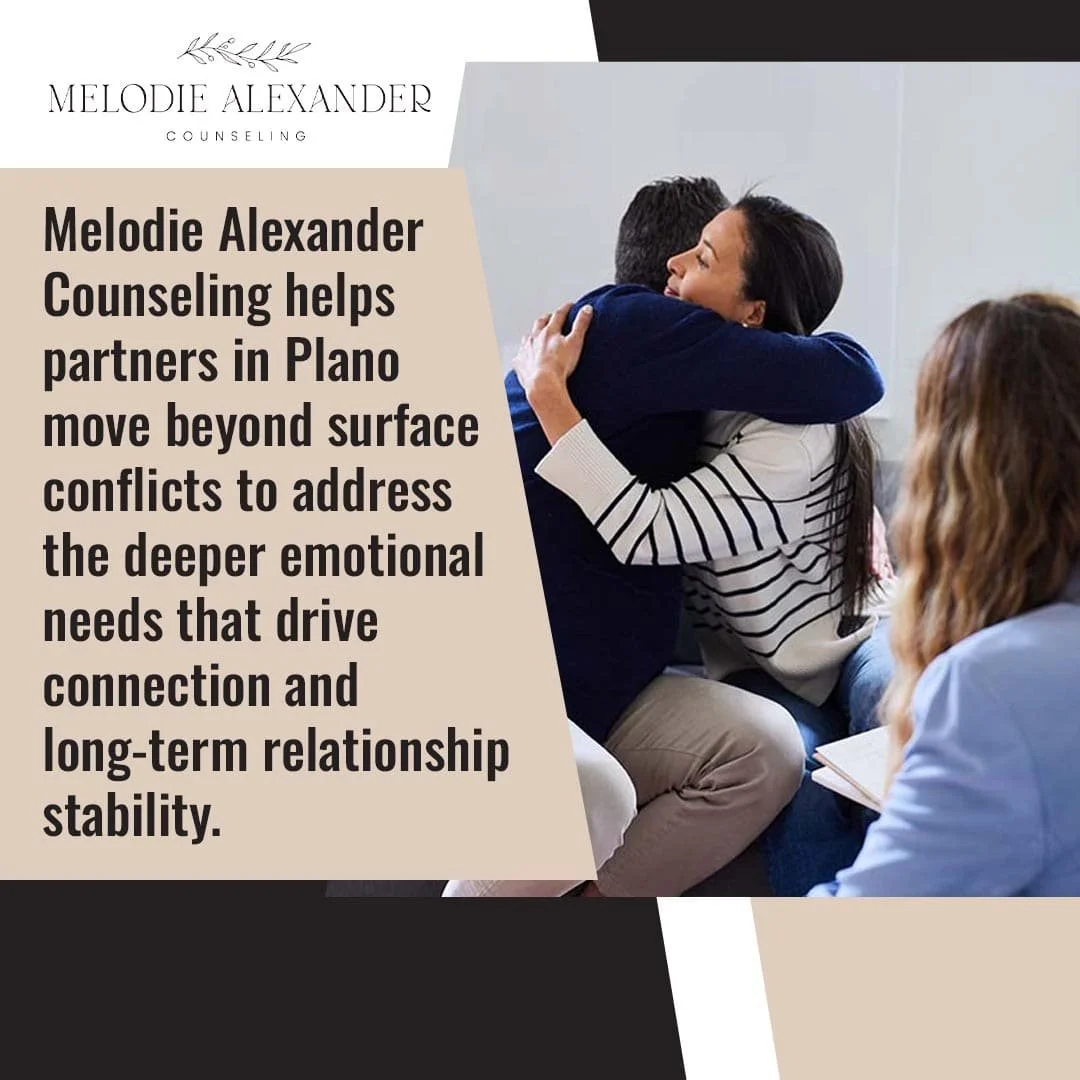
Creating a Safe Place for Honest Conversations
One of the most important parts of therapy is creating a space where both partners feel safe enough to speak openly. Many couples arrive feeling guarded or worried that sharing their feelings could lead to more conflict. In therapy, the goal is to slow things down so each person can feel heard and understood.
At Melodie Alexander Counseling, our work together is built on collaboration and compassion. Rather than placing blame on either partner, we focus on understanding the patterns that have developed in the relationship. From there, we begin helping couples learn new ways of communicating and reconnecting with each other in healthier, more supportive ways.
Therapy as a Collaborative Process
In effective therapy, the counselor and clients work together as a team to better understand the relationship.
Partners explore questions such as:
What emotional triggers appear during conflict?
What deeper needs are hidden beneath those reactions?
How can each partner respond with empathy rather than defensiveness?
Through this collaborative process, couples often begin to see each other differently.
Evidence-Based Tools That Support Healing
Our relationship therapists rely on structured therapeutic models, including:
Emotionally Focused Therapy
Internal Family Systems
Eye Movement Desensitization and Reprocessing
These approaches address both present relationship patterns and past experiences that influence emotional responses.
Over time, many couples begin describing their relationship as a place of safety, a space where both partners feel valued and supported.
Taking the First Step Toward Support
Reaching out for help can feel vulnerable. Many couples worry that therapy means their relationship is failing.
In reality, seeking support often reflects the opposite. Many couples reach out because they still care deeply about their relationship and want to find their way back to each other.
Through couples counseling, many gain tools to communicate more openly, understand each other’s emotional needs, and break long-standing conflict patterns.
Sessions typically last about fifty minutes and often begin weekly. As progress develops, appointments may gradually shift to every other week.
Some partners begin therapy together. Others start individually when their spouse is hesitant. Even individual work can create meaningful changes in relationship patterns.
Every relationship experiences moments of strain. Stress, miscommunication, and unresolved emotions can slowly create distance between partners who once felt deeply connected.
Therapy offers couples a chance to pause those patterns and gently explore what is truly happening beneath the surface. Often, the goal is not to determine who is right or wrong, but to help partners understand each other in ways that rebuild connection. Through guided conversations and evidence-based approaches, partners often rediscover empathy, trust, and emotional closeness.
If you and your partner feel stuck in repeated conflicts or emotional distance, seeking guidance through our professional couples therapy services may help you begin rebuilding the connection that matters most. To learn more, contact our team at Melodie Alexander Counseling today at (469) 232-7877 or hello@melodiealexandercounseling.com.