
Break Negative Patterns and Grow Together With Couples Counseling
Have you ever felt like the same argument keeps coming back, no matter how hard you try to fix it? Many couples experience this quiet cycle of frustration and distance, where communication fades and emotional walls slowly form. Over time, these patterns can weaken trust and leave both partners feeling disconnected. At Melodie Alexander Counseling in Plano, Texas, couples begin to understand the patterns that shape their relationship, improve communication, and rebuild closeness.
Each session provides a calm, supportive space where both partners can reflect, talk honestly about their experiences, and start reconnecting with empathy. This professional space helps partners explore emotional patterns, communicate with greater understanding, and rebuild closeness through guided reflection. With compassion and proven techniques, couples counseling helps partners recognize what drives recurring conflict and create meaningful, lasting change together.
Recognizing Negative Relationship Patterns
Negative relationship patterns often form gradually through repeated habits such as sarcasm during disagreements, emotional withdrawal during conflict, or defensiveness when feeling hurt. Over time, these reactions can become routine and emotionally draining, leaving both partners feeling disconnected. Through marriage counseling in Plano, couples begin to see these behaviors not as failures but as protective responses shaped by past experiences. Through guided support, partners begin to understand how these patterns affect communication and trust.
By identifying triggers, recognizing personal needs, and replacing defensiveness with openness, couples start to rebuild understanding. Seeing these recurring behaviors clearly is the initial step toward breaking them, and therapy provides the guidance needed to begin that process. Once these habits are recognized, the next step is exploring why they persist and how they influence emotional connection. Based in Plano, Texas, Melodie Alexander Counseling supports couples across Frisco, Allen, and nearby North Texas communities.
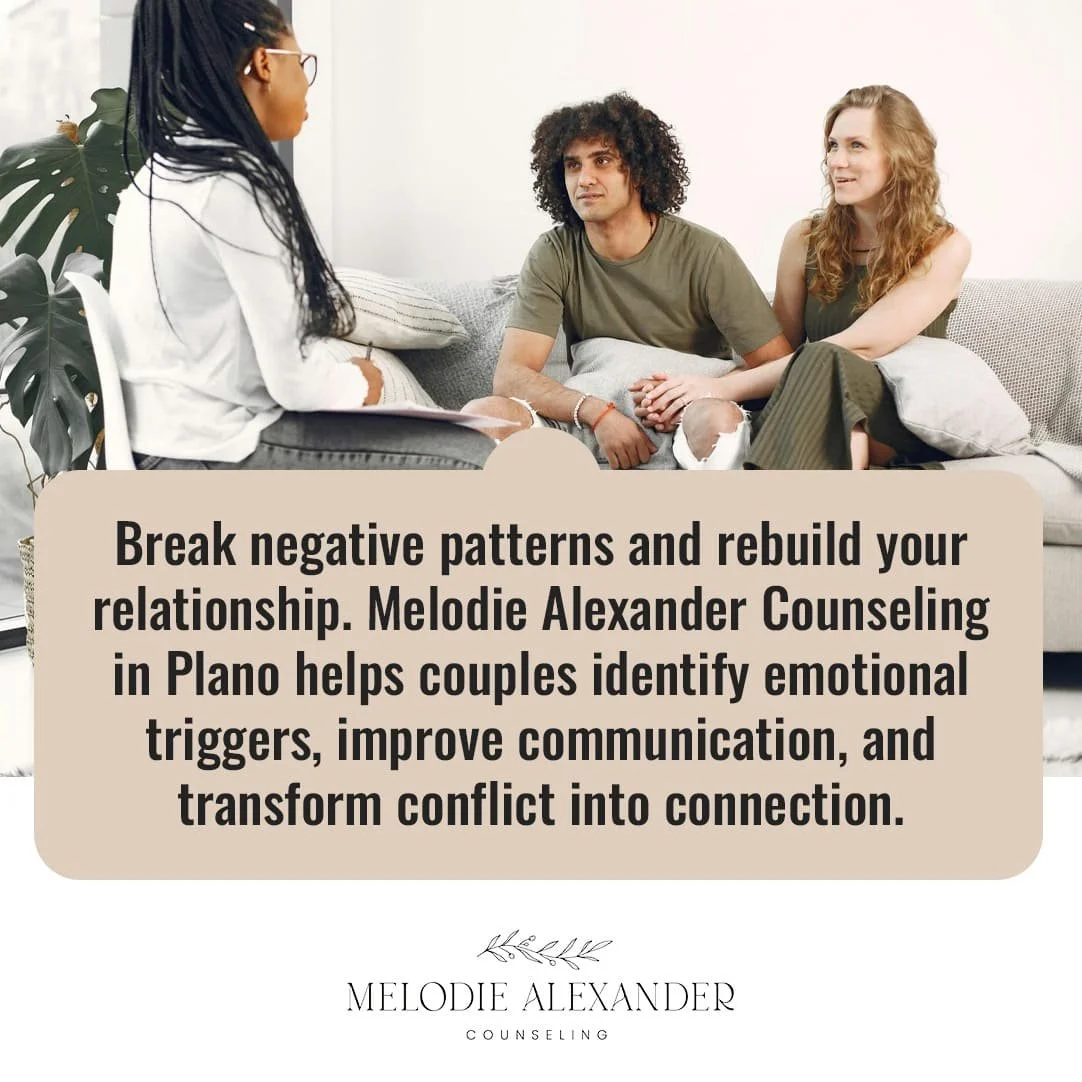
Why These Patterns Persist and How They Affect Connection
Many couples find themselves returning to the same disagreements, even when they both want change. These cycles are rarely intentional. They often grow from unspoken emotions or long-standing habits that feel hard to shift.
How Protective Patterns Create Emotional Distance
Behaviors like avoiding conflict or shutting down during tense moments often begin as ways to keep the peace or protect themselves from hurt. Over time, however, these protective habits can build emotional walls that make partners feel isolated. What once felt safe starts to limit communication and connection. With compassionate guidance, they can learn to recognize these responses as defenses, not failures. Understanding this pattern helps each partner respond with more compassion when tension arises.
Hidden Feelings Beneath Conflict
Frequent disagreements often hide deeper emotions such as fear of rejection, the need for reassurance, or longing to be valued. When those feelings go unspoken, misunderstandings take their place. Partners may interpret silence as disinterest or criticism as rejection. Therapy helps uncover these underlying emotions, allowing them to speak from a place of vulnerability instead of anger. As communication deepens, empathy begins to replace assumptions, and emotional clarity strengthens the bond between partners.
Creating Emotional Safety in Therapy
Couples counseling offers a calm and supportive space where partners can share their thoughts openly and feel understood. A skilled relationship therapist helps both individuals explore what drives their reactions and teaches ways to communicate needs respectfully. Within this supportive environment, couples discover that conflict is not a sign of failure but an opportunity for growth. Together, they practice expressing emotions with honesty while listening without judgment.
At Melodie Alexander Counseling, couples receive compassionate guidance that encourages open communication, emotional awareness, and mutual respect.
Rebuilding Emotional Understanding
When both partners start feeling heard, their relationship begins to soften. Defensiveness fades, and compassion grows in its place. Each conversation becomes a chance to build trust instead of tension. Over time, these changes strengthen the foundation of the relationship and create space for renewed affection. Couples learn that understanding is not about agreement; it is about connection, empathy, and emotional safety.
Recognizing the emotions beneath recurring struggles marks the beginning of healing and a return to genuine closeness. Progress in therapy rarely happens overnight. Real change requires consistency, openness, and a willingness to practice new ways of communicating outside the session.
How Professional Guidance Helps Break These Cycles
Expert counseling helps partners break negative cycles and build stronger connections. When emotional reactions repeat, guidance from a trained therapist helps couples move from misunderstanding to connection.
Guided Support to Break Old Cycles
Breaking unhealthy habits often starts with learning how to pause and reflect before reacting. A licensed marriage counselor nearby helps both partners understand what triggers frustration and how to respond more calmly. Through guided sessions, couples discover how their tone, timing, and body language influence communication. This awareness helps them make more intentional choices during difficult moments. Over time, these guided techniques replace conflict with understanding and promote steady emotional healing. Partners begin to see change as a shared effort rather than a personal struggle.
Communicating With Empathy and Intention
Therapeutic guidance provides specific techniques to strengthen connection and rebuild respect. Through relationship counseling, partners practice listening without judgment and expressing emotions with clarity. Each conversation becomes an opportunity to develop empathy and reduce tension. These small, consistent shifts in communication help create emotional balance within the relationship. A supportive therapist demonstrates how to engage with curiosity and kindness, helping both partners feel valued and understood. By practicing these skills in their daily lives, couples gently rebuild mutual trust and deepen their emotional connection.
Creating Meaningful Progress Through Therapy
In couples counseling, awareness turns into meaningful progress when partners begin to apply what they learn in daily life. Therapy provides structure, accountability, and encouragement as new habits develop. For those who prefer flexibility, online sessions offer the same experienced guidance in a private, comfortable setting. Each meeting focuses on helping partners translate insight into practice, transforming reactive habits into thoughtful responses. Over time, these experiences strengthen commitment and bring renewed closeness. The process encourages growth built on compassion, respect, and emotional stability.
With professional guidance and genuine effort, each person learns to recognize old behaviors before they return and replace them with understanding and care.
Building Healthier Communication Through Counseling
Effective counseling guides partners with practical strategies that foster sustained growth and stronger connections. One valuable technique is reflective listening, where each person repeats what they heard to confirm understanding. This simple approach reduces confusion and builds empathy.
Other approaches, such as emotion labeling or daily appreciation exercises, help individuals reconnect and strengthen closeness. Research in relationship psychology shows that empathy and active listening are key predictors of satisfaction and stability. When deeper challenges arise, personalized guidance is often most helpful. For example, therapy focused on trust issues helps couples rebuild emotional safety, while counseling after infidelity offers space to heal together, understand one another more deeply, and restore trust within the relationship.
Structured conversations and guided at-home practices encourage accountability. Over time, these techniques replace tension with cooperation and help both individuals break negative cycles while growing together with renewed understanding.
Continuing Progress Beyond the Session
When individuals begin practicing what they have learned in sessions, meaningful transformation continues outside the therapy space. Every intentional choice, whether it’s pausing before responding, showing appreciation, or listening with empathy, helps to build healthier habits of understanding and respect. Over time, these consistent actions form a stronger emotional foundation.
Guided support reminds each person that harmony grows from patience, teamwork, and self-awareness. The skills developed during sessions become reliable tools for handling challenges with calm communication. Even in moments of disagreement, dialogue stays thoughtful and kind.
With continued effort, couples move beyond past struggles and build a bond grounded in mutual support and steady growth. Counseling becomes more than a place for recovery. It turns into a path toward deeper unity, emotional fulfillment, and shared purpose.
Building Resilience and Renewed Connection
As communication and understanding improve, they begin to experience a renewed sense of closeness. Challenges that once created distance now feel easier to face together because both people have the tools to respond with patience and care. Through continued reflection, moments of tension become opportunities for deeper understanding and shared growth.
Working with a marriage therapist nearby helps both individuals see their connection as something that evolves with time and compassion. When emotional safety is present, difficult conversations lead to insight rather than conflict. This supportive approach helps rebuild trust while promoting steady emotional stability.
By nurturing these skills outside of sessions, partners find that genuine closeness grows from small, consistent acts of kindness. Real progress is not about perfection but about presence, respect, and willingness to grow. Over time, these changes create a stronger bond and a more balanced, fulfilling partnership.
Healing Together for a Stronger Tomorrow
As couples continue to build awareness and emotional understanding, their partnership begins to reflect a renewed sense of purpose. The patterns that once created distance become opportunities to strengthen trust and closeness. Each conversation holds the potential to restore balance and reinforce the bond built through shared effort.
With self-awareness and steady practice, both of them learn to respond to challenges with patience and curiosity instead of frustration. They start to recognize that meaningful change happens in small, consistent steps through listening, appreciation, and compassion. This ongoing process transforms what once felt difficult into a foundation of teamwork and emotional steadiness.
Over time, partners discover that healing together is not about perfection but about staying engaged, responsive, and hopeful. Their bond becomes a space of mutual support where care feels intentional, balanced, and deeply understood.
Frequently Asked Questions (FAQs)
1. How does counseling help people change recurring patterns?
Sessions provide a supportive space to recognize reactions that create tension or distance. With professional guidance and open dialogue, both individuals learn to replace old habits with healthier responses. Over time, this process nurtures empathy, patience, and emotional steadiness.
2. What if one person feels uncertain about beginning sessions?
It’s common for someone to feel hesitant at first. A skilled counselor creates a calm, nonjudgmental setting where both people can share concerns freely. Early meetings focus on shared goals and trust-building, helping each person feel supported and understood.
3. How long does it take to notice positive change?
Progress varies for every relationship. Some begin seeing early improvement after a few sessions, while others evolve more gradually. Staying consistent, being open, and practicing new communication skills often lead to steady, lasting progress.
4. Can counseling help rebuild closeness after conflict or emotional distance?
Yes. The process helps rebuild trust through honest discussion and deeper understanding. As compassion replaces defensiveness, emotional closeness begins to return, helping both individuals reconnect and strengthen their bond over time.
Benefits of Couples Counseling for Growth and Connection
Healing negative patterns is only part of the process; real progress comes through growth and reconnection. Many find that conversations become calmer and disagreements are resolved more thoughtfully over time. Counseling offers a supportive space to share feelings openly and rediscover affection.
Therapy encourages both individuals to rebuild intimacy, set healthy boundaries, and value each other’s efforts. Marriage counseling focused on growth and togetherness helps develop lasting qualities such as patience, empathy, and mutual respect. The experience brings about genuine transformation, turning challenges into opportunities for deeper emotional connection and shared understanding.
Start Your Path to a Stronger Relationship with Melodie Alexander Counseling
Breaking old habits in a relationship takes patience, reflection, and the right support. Through couples counseling, partners gain tools to replace frustration with understanding and rebuild trust step by step. Each session becomes a chance to communicate with clarity, reconnect emotionally, and restore balance beyond the therapy room. At Melodie Alexander Counseling in Plano, Texas, every couple receives compassionate, evidence-based support that fosters genuine connection and emotional growth.
Whether in person or through online sessions, partners are guided to strengthen communication and build a healthier bond. If you’re ready to begin your journey toward a stronger relationship, get in touch today, call (469) 232-7877 or email hello@melodiealexandercounseling.com to schedule your initial session. You can also fill out the contact form on our website to connect with us directly.