
How Couples Therapy Works and What to Expect in Each Session
Life with a partner can be deeply fulfilling, but it can also bring challenges. Even the healthiest relationships experience conflict at times. Are you noticing that disagreements or emotional distance are affecting your connection with your partner? When communication breaks down or feelings grow apart, reaching out to a couples therapist nearby can help partners rebuild understanding and closeness.
Melodie Alexander Counseling in Plano provides a supportive and nonjudgmental environment where both individuals can share openly and work toward mutual understanding. Whether you are newly married or have spent years together, relationship stress can affect many areas of your life. A relationship therapist offers guidance, practical strategies, and personalized support to help you address these challenges. We provide counseling for couples in Plano, Addison, Richardson, Frisco, Carrollton, Allen, and surrounding areas, to strengthen their connection and address challenges. Learning what to expect from therapy can also make starting the process feel more comfortable and hopeful.
The Clinical Process of Couples Therapy
Couples therapy, also known as marriage counseling or relationship therapy, is a structured form of counseling for couples facing conflicts or difficulties in their relationship. Unlike advice from friends or family, therapy is guided by a trained professional who helps partners identify unhealthy patterns, enhance communication, and understand each other’s emotional needs.
Therapy is not about blaming each other; it emphasizes problem-solving, mutual understanding, and emotional connection. The process typically begins with understanding the couple’s unique goals and concerns, and each session builds practical skills to manage conflict, strengthen intimacy, and support a healthier, more resilient relationship.
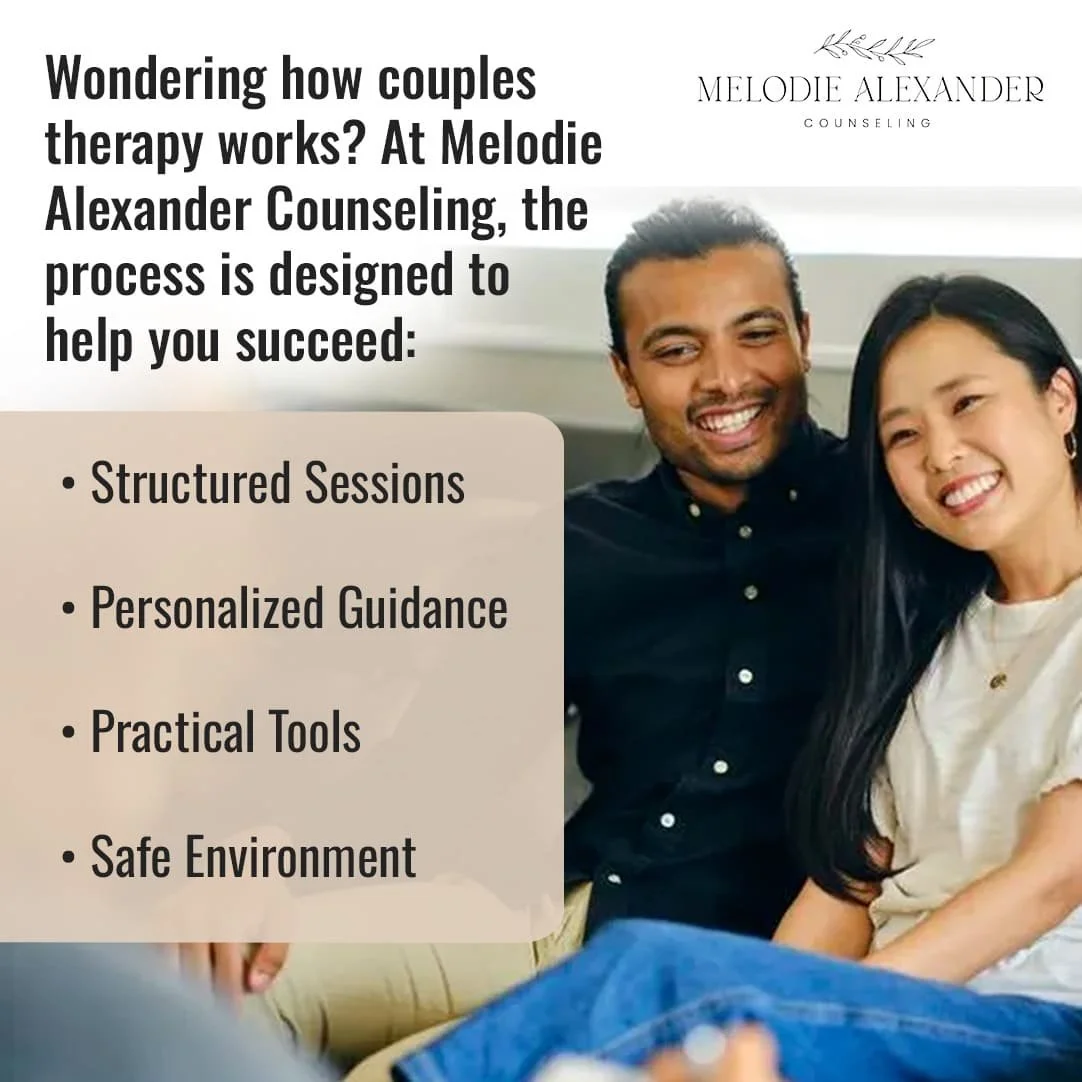
How Couples Counseling Can Strengthen Your Relationship
Couples counseling provides structured support for partners to address challenges and strengthen their relationship before issues escalate. Working with a trained therapist, couples learn to communicate more effectively, rebuild trust, and deepen emotional connections. Counseling also equips partners with practical skills to manage conflicts, enhance intimacy, and foster long-term relationship resilience.
Better Communication
Couples learn to express their thoughts and feelings clearly while therapists teach techniques for active listening and empathetic responses. Partners gain insight into how tone and choice of words affect understanding, and sessions help identify barriers to effective communication. By practicing these skills in a structured environment, couples strengthen their connection and reduce recurring misunderstandings.
Conflict Resolution
Therapists guide partners in addressing disagreements constructively, helping them manage issues without escalating tension. Couples learn to compromise and find solutions that work for both partners, focusing on solving problems instead of blaming each other. Learning effective conflict-resolution strategies strengthens trust and promotes long-term relationship stability.
Stronger Emotional Connection
Counseling helps partners reconnect on a deeper emotional level by exploring unexpressed feelings and unmet needs safely. Structured exercises encourage vulnerability and shared emotional experiences, while therapists support couples in rebuilding intimacy and empathy. Strengthening these emotional bonds increases relationship satisfaction and fosters resilience.
Problem-Solving Skills
Couples develop effective skills to work through current challenges and create healthier ways to prevent future conflicts. Therapists teach structured approaches for collaborative decision-making, building partners’ confidence in handling disagreements independently. These skills contribute to long-term resilience and promote overall relationship growth.
Safe Space for Expression
Sessions provide a non-judgmental environment where partners feel heard and validated. Therapists maintain a safe, respectful space, allowing couples to explore sensitive topics without fear of judgment. This safe space promotes openness, understanding, and deep emotional connection.
Engaging in couples counseling can prevent small issues from becoming major problems. Many couples discover that therapy helps rebuild trust, increase intimacy, and cultivate a healthier, more resilient relationship overall.
What to Expect in Your First Couples Therapy Session
Feeling nervous before your initial couples therapy session is completely normal. Knowing what to expect can help ease those feelings. Couples counseling in Plano offers a safe and supportive space where both partners are encouraged to speak openly and feel truly heard.
In sessions, a licensed therapist may:
Explore communication challenges and uncover what might be causing misunderstandings.
Help you understand the underlying emotions and needs that influence your connection.
Teach practical skills to communicate more effectively, resolve conflicts, and strengthen intimacy.
Identify negative relational patterns that may create distance and guide you toward healthier cycles.
Provide a compassionate, non-judgmental environment where all emotions and concerns are valid.
Support couples in rebuilding trust and fostering a secure emotional bond.
An experienced relationship therapist guides both partners through the process, making sure each person is heard. The focus is on building understanding, connection, and collaboration rather than assigning blame.
Understanding the Couples Therapy Process
Starting couples therapy can feel intimidating, but knowing the process helps ease anxiety. Therapy provides a safe, supportive space where both partners can speak openly, explore challenges, and work together to strengthen their connection.
Initial Consultation
Most therapists, including those at Melodie Alexander Counseling, offer a complimentary 15-minute phone or video consultation. This session allows couples to share their concerns, ask questions, and learn about the therapy process. During this time, therapists explain session structure, confidentiality policies, and what to expect in future sessions, helping couples feel prepared and comfortable before starting formal counseling.
First Couples Therapy Session
The initial session typically involves sharing your relationship history, discussing current concerns, setting therapy goals, and understanding how therapy works. The therapist asks questions to understand each partner’s perspective, sets expectations for session length and frequency, and explains potential at-home exercises. A safe, nonjudgmental environment is established where both partners can speak openly, fostering trust and encouraging honest communication from the very beginning.
Depending on your goals and progress, sessions are typically scheduled weekly or biweekly, with each lasting around 50 minutes. The frequency may adjust over time as couples begin to notice improvements.
Exploring Relationship Patterns
Ongoing sessions focus on identifying recurring patterns that may contribute to conflict, such as communication breakdowns, emotional withdrawal, or repeated arguments. The therapist helps couples understand each partner’s perspective and emotional responses, recognize triggers, and adopt healthier ways of interacting. This step is important for breaking negative cycles and improving overall relationship quality.
Developing Communication Skills
Healthy communication is a central focus of couples therapy. Couples learn to listen actively, express feelings without blame, and respond constructively. Therapists guide partners in practicing empathy, reflective listening, validation, and conflict resolution strategies. Couples also learn to notice nonverbal cues, which improves understanding and helps prevent small misunderstandings from escalating into larger conflicts.
Addressing Emotional Issues
It’s common for couples to bring strong emotions, such as anger, sadness, or resentment, into therapy. Therapy provides a safe space to explore these feelings. Partners learn coping strategies and self-regulation techniques to manage intense emotions effectively. Over time, couples develop emotional awareness, respond to each other with empathy, and build deeper trust and intimacy.
Setting Goals and Tracking Progress
Therapy includes setting both short-term and long-term goals for relationship growth. Couples learn practical strategies to maintain a healthy relationship outside sessions. Progress is regularly reviewed, and goals are adjusted as needed to keep therapy relevant and effective. Celebrating small achievements along the way helps couples stay motivated and recognize improvements in their relationship.
Practicing Skills Between Sessions
Therapists often assign exercises to practice at home, such as communication drills, daily check-ins, conflict resolution techniques, journaling, or reflection exercises. These activities reinforce skills learned in therapy and help couples integrate them into daily life. Practicing outside of sessions strengthens accountability and allows couples to experience meaningful improvements in their relationship, even in stressful situations.
Each stage of couples therapy builds trust, understanding, and emotional connection. With consistent participation and guidance, partners begin to see meaningful progress, creating a stronger, more supportive relationship over time. Couples therapy in Plano provides professional guidance, helping partners work through challenges and build a deeper emotional connection.
The Role of a Couples Therapist
During counseling, the couples therapist serves as a supportive guide, not a judge. They create a safe, confidential space where both partners can share openly, explore emotions, and work through challenges together.
At Melodie Alexander Counseling in Plano, therapists focus on:
Fostering a welcoming environment where every partner feels heard and respected
Encouraging honest, open expression of thoughts and feelings
Teaching practical skills for communication, problem-solving, and emotional connection
Supporting both partners equally to build trust and understanding
Couples looking for a relationship therapist nearby can work with a trained counselor to strengthen communication, deepen intimacy, and build a meaningful connection.

Building a Stronger Relationship Through Professional Guidance
Couples therapy is not only about resolving problems but also about creating a healthier foundation for long-term growth. Through consistent sessions, partners learn how to communicate more effectively, manage emotions constructively, and strengthen their bond. A licensed couples therapist helps partners uncover the root causes of recurring challenges and fosters emotional awareness that promotes meaningful change.
Therapy provides a structured path toward healing, guided by evidence-based techniques and compassionate care. According to the American Association for Marriage and Family Therapy, after receiving treatment, almost 90% of clients report an improvement in their emotional health, and nearly two-thirds report an improvement in their overall physical health. A majority of clients report an improvement in their functioning at work, and over three-fourths of those receiving marital/couples or family therapy report an improvement in the couple relationship.
Practices for Strengthening Your Relationship Through Counseling
Couples counseling can help partners build stronger, healthier relationships. Following practical strategies during and between sessions helps you get the most out of the process.
Be Open and Honest: Share your thoughts and feelings sincerely. Transparency helps your therapist understand your perspective and guides meaningful progress. Also, take time to listen openly to your partner’s experiences and emotions without judgment.
Practice Skills Between Sessions: Apply communication and problem-solving techniques at home. Consistent practice reinforces new habits and strengthens your connection. Reflecting regularly on what you’ve learned in sessions helps turn new skills into lasting behaviors.
Give Yourself Time: Change and growth take time, and progress may be gradual. Be patient with yourself and your partner, and recognize each small step forward as meaningful progress.
Commit Wholeheartedly to the Process: Attend sessions regularly and actively engage in exercises and discussions. Full participation enhances the effectiveness of therapy. Approach each session with openness and a willingness to explore new perspectives.
Communicate with Your Therapist: Share questions, concerns, or feedback about the process. Open dialogue helps keep your therapy focused on your relationship’s unique needs. Being honest about what’s working or challenging allows your therapist to guide you more effectively.
Following these practices improves the effectiveness of couples therapy and fosters a stronger, healthier relationship. Working with a skilled couples therapist nearby in Plano provides guidance and support as you apply these practices to strengthen your relationship.
Frequently Asked Questions About Couples Counseling
1. How often should we attend couples therapy sessions?
Most couples attend sessions weekly or bi-weekly. Frequency can vary based on relationship needs, progress, and the goals set with your therapist. Consistent attendance helps maintain momentum and reinforce skills learned in therapy.
2. Will couples therapy help us communicate better?
Yes. Therapy focuses on healthy communication, teaching active listening, expressing feelings without blame, and understanding nonverbal cues. Couples learn practical strategies to prevent misunderstandings and resolve conflicts constructively.
3. Can couples therapy address emotional challenges like anger or resentment?
Absolutely. Therapy provides a safe space to explore strong emotions. Partners learn coping strategies, emotional regulation techniques, and ways to respond empathetically, fostering deeper trust and emotional intimacy.
Start Your Journey to a Stronger Relationship with Melodie Alexander Counseling
Couples therapy provides a safe, supportive space where partners can explore challenges, rebuild trust, and deepen their emotional connection. At Melodie Alexander Counseling, couples receive compassionate, evidence-based support in a safe and welcoming environment. Melodie Alexander, LPC, LMFT-A, holds a Master of Science in Professional Counseling from Texas Woman’s University and has advanced training in Emotionally Focused Couples Therapy (EFTC) and Emotionally Focused Individual Therapy (EFIT). This training helps her guide couples through each stage of therapy and strengthen their emotional connection.
With guided sessions and support from Melodie Alexander Counseling, couples in Plano, The Colony, Dallas, Murphy, Fairview, McKinney, and surrounding areas can improve communication, resolve conflicts, and strengthen their bond. Schedule a complimentary 15-minute consultation to see how counseling can help your unique relationship thrive. Call (469) 232-7877 or email hello@melodiealexandercounseling.com or submit a request through our contact page to take the initial step toward a healthier, stronger partnership.