
How Marriage Counseling Helps Prevent Divorce Before It’s Too Late
Marriage can be deeply rewarding. However, it also comes with challenges that can strain even the closest partnerships. Conflicts, miscommunication, past hurts, and daily stress can gradually create emotional distance between partners. If these issues go unaddressed, they may escalate and lead to divorce. Melodie Alexander Counseling in Plano, TX, offers professional guidance to help couples strengthen their connection and prevent relationship breakdown. Are you noticing tension, frequent arguments, or emotional distance in your marriage? Through counseling, couples learn to rebuild trust, improve communication, and develop healthier ways to handle conflicts.
Strengthen Your Relationship with Couples Therapy
Marriage counseling is a structured process in which couples work with a licensed therapist to improve their relationship. It is not only for marriages in crisis. Many couples seek counseling to strengthen their connection, manage conflicts effectively, and build a healthier, more resilient partnership. During sessions, a therapist helps partners recognize negative patterns. They also work on improving communication and addressing unresolved issues. Counseling provides a supportive, nonjudgmental environment. Couples can explore emotions, share concerns, and develop practical strategies to handle challenges.
Signs Your Marriage May Be in Trouble
Recognizing early warning signs is important. Couples often wait too long to seek help. This delay can make issues harder to resolve. Common signs include:
Frequent arguments over minor issues: Small disagreements can quickly escalate into major conflicts. These arguments often revolve around the same topics, causing frustration for both partners. Over time, repeated unresolved conflicts can weaken trust and reduce mutual respect.
Emotional distance: Partners may feel disconnected or withdrawn from each other. They might stop sharing their thoughts and emotions. This distance can make it harder to maintain intimacy or solve problems together.
Lack of communication: Conversations may become superficial or avoid important topics. Couples often avoid discussing sensitive issues to prevent arguments. This can result in misunderstandings, unmet emotional needs, and a growing sense of separation.
Resentment or unresolved anger: Past conflicts that remain unaddressed can create ongoing tension. Lingering anger may show up as criticism, sarcasm, or withdrawal. If ignored, resentment can accumulate and place further strain on the relationship.
Loss of intimacy: Emotional and physical closeness may decline over time. Partners might avoid meaningful conversations or physical touch. A lack of intimacy often signals deeper issues that need attention.
Thoughts of separation or divorce: Divorce may be considered as a solution to ongoing problems. Partners can feel hopeless about improving the relationship or resolving conflicts. Seeking counseling early can help couples address issues before reaching this point.
Recognizing these warning signs early and seeking guidance from a marriage counselor nearby can help couples address issues before they escalate, with early intervention strengthening the relationship for the long term.
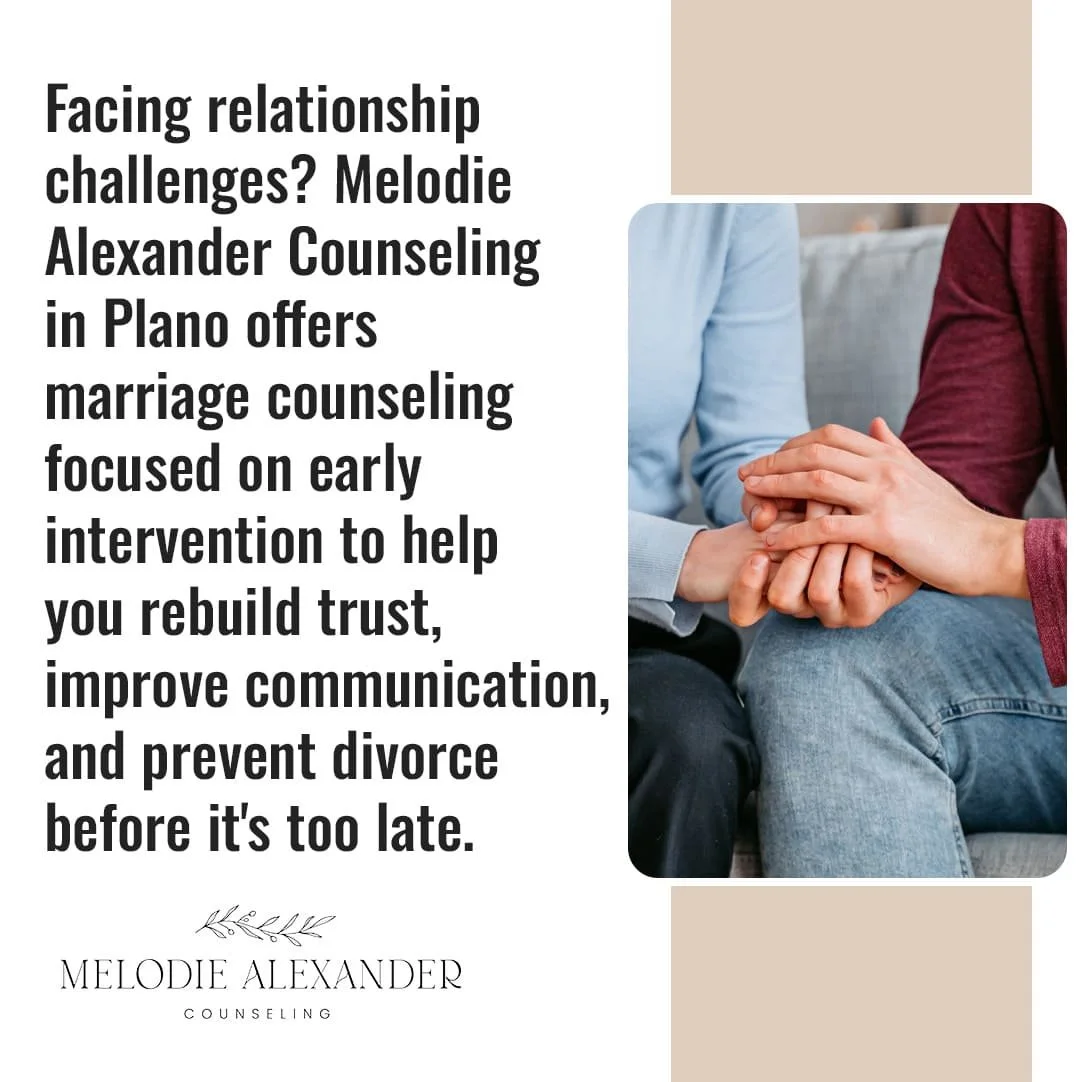
Building Stronger Connections Through Marriage Counseling
Many couples seek counseling to improve communication, resolve conflicts effectively, and build a more resilient partnership. Therapists often use evidence-based approaches such as Emotionally Focused Therapy to guide couples toward meaningful change. During sessions, therapists help partners recognize negative patterns and develop practical strategies to manage challenges.
Counseling provides a safe, supportive, and nonjudgmental environment where couples can explore emotions, share concerns, and strengthen their connection. Couples in Plano, TX, can partner with Melodie Alexander Counseling to receive personalized guidance tailored to their unique challenges. Our marriage counseling in Plano offers a structured approach to help couples improve communication, foster emotional intimacy, and develop skills to maintain a lasting and fulfilling relationship.
How Marriage Counseling Works to Prevent Divorce
Every marriage faces challenges, and even small issues can grow into larger problems if left unaddressed. Marriage counseling provides a safe and supportive space where couples can work together to strengthen their relationship and overcome obstacles.
Rebuilding Trust
Trust is the foundation of a healthy relationship. Past hurts, broken promises, or infidelity can weaken it over time. A skilled counselor helps couples rebuild trust through guided exercises, open communication, and accountability practices. These steps allow partners to forgive past mistakes and regain confidence in each other.
Improving Communication
Many marital challenges stem from poor communication. Couples may struggle to express feelings or understand each other’s perspectives. Counseling teaches active listening, conflict resolution, and constructive dialogue techniques. These skills make sure that both partners feel heard and understood in everyday interactions.
Identifying and Breaking Negative Patterns
Couples often fall into recurring behaviors that increase conflict. Therapy helps partners recognize these patterns and understand what triggers them. With guidance, couples can adopt healthier responses, reduce misunderstandings, and prevent arguments from escalating.
Resolving Conflicts Effectively
Disagreements are natural in any marriage, but unresolved conflicts can lead to long-term resentment. Counseling shows couples how to express needs without blame, listen without defensiveness, and find solutions collaboratively. Learning these strategies strengthens problem-solving and reduces tension.
Strengthening Emotional Connection
Over time, couples may drift emotionally. Therapy focuses on rebuilding closeness through sharing feelings, expressing appreciation, and spending quality time together. Strengthening the emotional bond helps partners maintain intimacy and reduces the risk of separation.
By focusing on trust, communication, and emotional connection, couples can rebuild a stronger, healthier partnership. With guidance from a skilled marriage therapist nearby, partners learn effective ways to communicate, resolve conflicts, and grow together.
Premarital Counseling: Building a Strong Foundation for Lasting Relationships
Starting a marriage with a strong foundation can strengthen the relationship’s future, and premarital counseling helps couples prepare for challenges before they arise.
Builds a Solid Foundation for the Relationship: Couples learn to understand each other’s expectations and values. This preparation helps prevent misunderstandings in the future.
Enhances Communication Skills: Partners explore how to express feelings and listen actively. Effective communication reduces conflicts and strengthens emotional connections.
Addresses Major Aspects of Married Life: Sessions often cover finances, household responsibilities, family planning, and long-term goals. Couples gain clarity and alignment on important decisions.
Teaches Conflict Resolution Strategies: Couples practice techniques to handle disagreements calmly and constructively. This reduces stress and prevents arguments from escalating.
Maintains Emotional Intimacy: Exercises focus on sharing appreciation, spending quality time, and understanding each other’s needs. Stronger intimacy builds resilience against future challenges.
Engaging in premarital counseling gives couples the skills and confidence to face life’s challenges together. By investing in these strategies early, couples can strengthen their partnership and reduce the risk of future conflicts.
Early Signs You Might Benefit from Counseling
It’s never too soon to seek guidance in a relationship. Addressing concerns early with a skilled relationship therapist can prevent small problems from escalating. Common signs that counseling may help include:
Frequent Disagreements: Small arguments happen often and can escalate quickly. Repeating conflicts creates frustration and tension.
Emotional Disconnect: Partners may feel disconnected or withdrawn. This distance can make solving problems and maintaining intimacy harder.
Loss of Intimacy: Emotional and physical closeness declines over time. Couples may feel lonely or disconnected from each other.
Difficulty in Communicating Needs Effectively: Conversations may lead to misunderstandings or frustration. Couples struggle to express feelings clearly.
Recurring Arguments About Finances or Responsibilities: Same topics keep causing conflict. This pattern can erode trust and respect.
Resentment or Unresolved Anger: Past conflicts continue to create tension. Lingering anger may appear as criticism or withdrawal.
Avoidance of Important Conversations: Sensitive topics are skipped to prevent arguments. This can lead to unmet emotional needs.
Thoughts of Separation or Divorce: One or both partners consider ending the relationship. Seeking help early can prevent this outcome.
Early intervention helps couples develop practical skills, rebuild trust, and strengthen emotional intimacy before issues become deeply entrenched.
The Benefits of Seeking Counseling Early
Addressing relationship challenges early can prevent small issues from turning into major problems. Couples who seek counseling proactively often experience improved communication, a stronger emotional connection, and reduced conflict.
Improved Communication Skills
Early counseling helps couples learn how to express feelings clearly and listen actively. By practicing constructive dialogue techniques, partners reduce misunderstandings and feel more heard in everyday interactions. Couples also learn to address sensitive topics without defensiveness, fostering mutual respect. Over time, these communication skills become part of the relationship’s foundation, preventing recurring conflicts.
Strengthened Emotional Connection
Couples can reconnect emotionally before distance grows. Therapy encourages sharing appreciation, spending quality time together, and addressing unresolved feelings to maintain intimacy. Partners gain insight into each other’s emotional needs and learn to respond with empathy. This strengthened connection creates a deeper sense of trust and satisfaction in the relationship.
Reduced Conflict and Increased Resilience
Counseling equips couples with strategies to handle disagreements calmly and constructively. Learning these skills early helps prevent conflicts from escalating and builds a stronger, more resilient relationship. Couples also discover ways to manage stressors together and support each other during challenging times. Over time, this resilience helps the relationship endure life’s ups and downs.
Seeking counseling early helps couples build a healthier, more connected relationship. By improving communication, deepening emotional bonds, and managing conflicts effectively, couples lay the foundation for a lasting and fulfilling relationship.
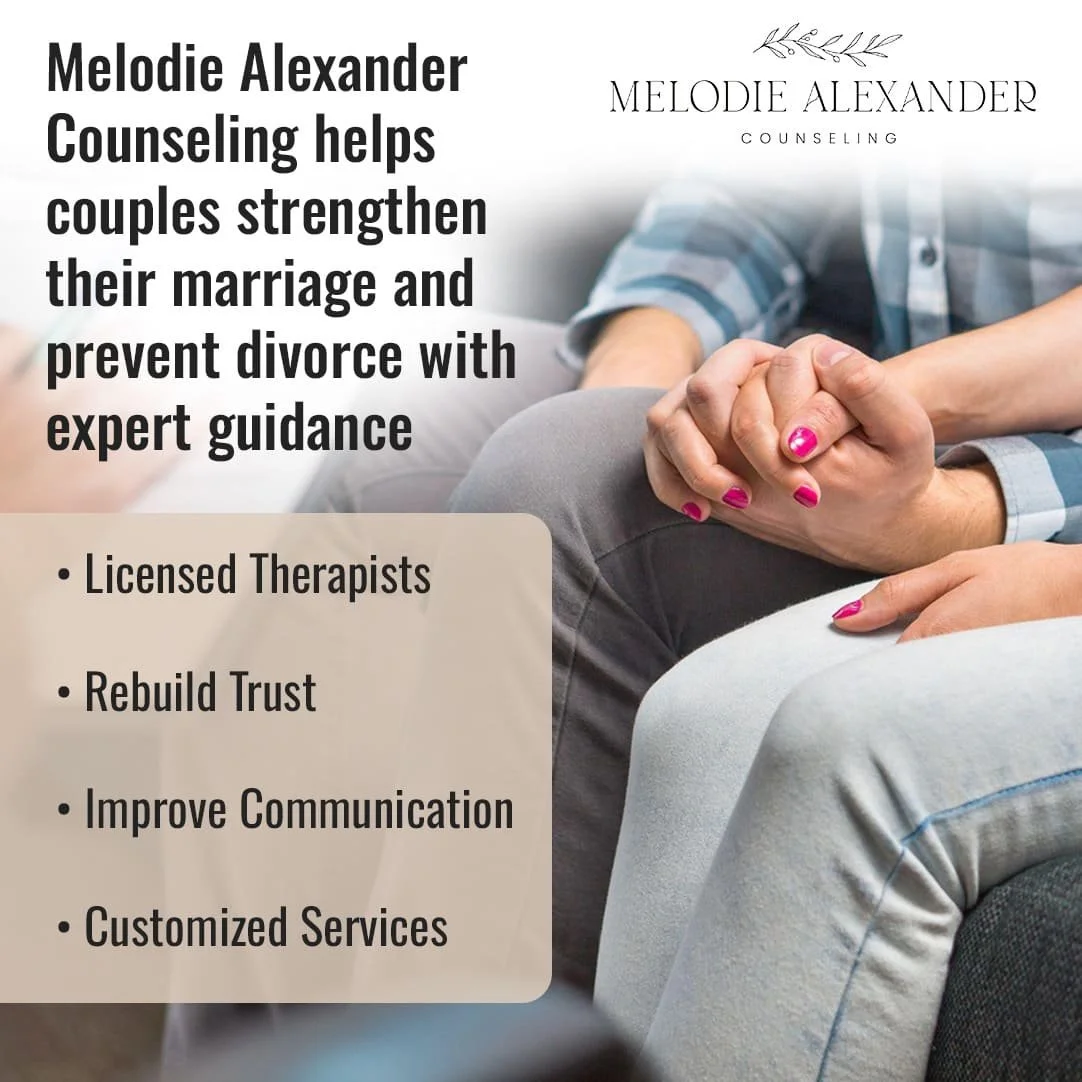
Is It Too Late for Marriage Counseling?
Many couples wonder if therapy is worthwhile when the relationship is in crisis. While early intervention offers the best chance of success, it is rarely too late. Counseling may still help if:
Both partners are willing to put in the effort and actively participate in counseling.
There is a genuine desire to save the marriage and work toward a stronger, healthier relationship.
Partners are open to learning better ways to communicate, including listening, expressing feelings, and resolving disagreements constructively.
There is a commitment to understanding and addressing the root causes of conflict, rather than just managing surface-level issues.
If abuse, ongoing infidelity, or refusal to participate is present, therapy may be less effective. However, individual counseling can still provide clarity, guidance, and support for one or both partners.
Frequently Asked Questions About Marriage Counseling and Couples Therapy
1. What is the difference between marriage counseling and couples therapy?
Marriage counseling typically focuses on issues within a legal or committed marital relationship, while couples therapy can be for any committed partnership. Both aim to improve communication, resolve conflicts, and strengthen emotional connections.
2. How long does marriage counseling take to see results?
The duration varies depending on the couple’s challenges. Some notice improvements in communication and understanding within a few sessions, while deeper issues may require ongoing therapy over several months.
3. Can counseling help if one partner is unwilling to participate?
Therapy is most effective when both partners engage. However, individual counseling can still provide clarity, coping strategies, and insight into relationship dynamics for the willing partner.
Your Path Toward a Healthier, Stronger Relationship with Melodie Alexander Counseling
Marriage can be challenging, but professional support can make a meaningful difference. At Melodie Alexander Counseling in Plano, TX, our marriage counseling and couples therapy sessions provide a safe, confidential space to rebuild trust, improve communication, and strengthen your connection. Our experienced therapists, led by Melodie Alexander, LPC, LMFT-A, bring specialized training in Emotionally Focused Couples Therapy (EFTC) and Emotionally Focused Individual Therapy (EFIT), helping couples address challenges and strengthen their relationships.
If you notice tension, frequent arguments, or emotional distance in your relationship, our experienced therapists are here to help. Schedule your counseling sessions to receive personalized guidance and strengthen your marriage. Call us at (469) 232-7877 or email hello@melodiealexandercounseling.com to schedule your session and begin your journey toward a stronger, more fulfilling marriage.