
Melodie Alexander Counseling Explains Emotional Intimacy For A Healthy Marriage
When things don’t feel good between you and your partner, it can seep into every part of your life. You may be functioning day to day, keeping up with responsibilities, yet carrying a quiet sense of heaviness. Conversations feel shorter or more guarded. Moments that once felt connecting now feel distant or tense. You may even find yourself lying next to the person you love and wondering why you feel so alone.
If you recognize this emotional distance, it does not mean your relationship has failed. Many people seek the support of a marriage counselor, not because love is gone, but because emotional closeness feels fragile or out of reach. Often, the longing underneath the frustration is simple and profound: I want to feel close to you again. I want to know that I matter.
Emotional intimacy is not about avoiding conflict or being emotionally available at all times. It is about feeling emotionally safe enough to reach for one another and trust that the connection will be there. This article speaks directly to that longing and explores how emotional intimacy is built, how it quietly erodes, and how it can be rebuilt with intention, patience, and support.
Key Takeaways
Emotional distance can exist even when love and commitment are still present. Many couples seek therapy because they miss feeling emotionally safe and connected, not because the relationship is over.
When emotional safety feels uncertain, partners often protect themselves through withdrawal, defensiveness, or repeated conflict rather than open vulnerability.
Recurring arguments or emotional shutdown are often signs of unmet emotional needs, including the need to feel valued, understood, and emotionally important to one another.
Attachment-based reactions can intensify when connection feels threatened, shaping how partners seek closeness or pull away during stress.
With intentional support, emotional intimacy can be rebuilt by slowing down negative patterns, restoring emotional safety, and learning new ways to respond to one another.
What Emotional Intimacy Actually Feels Like
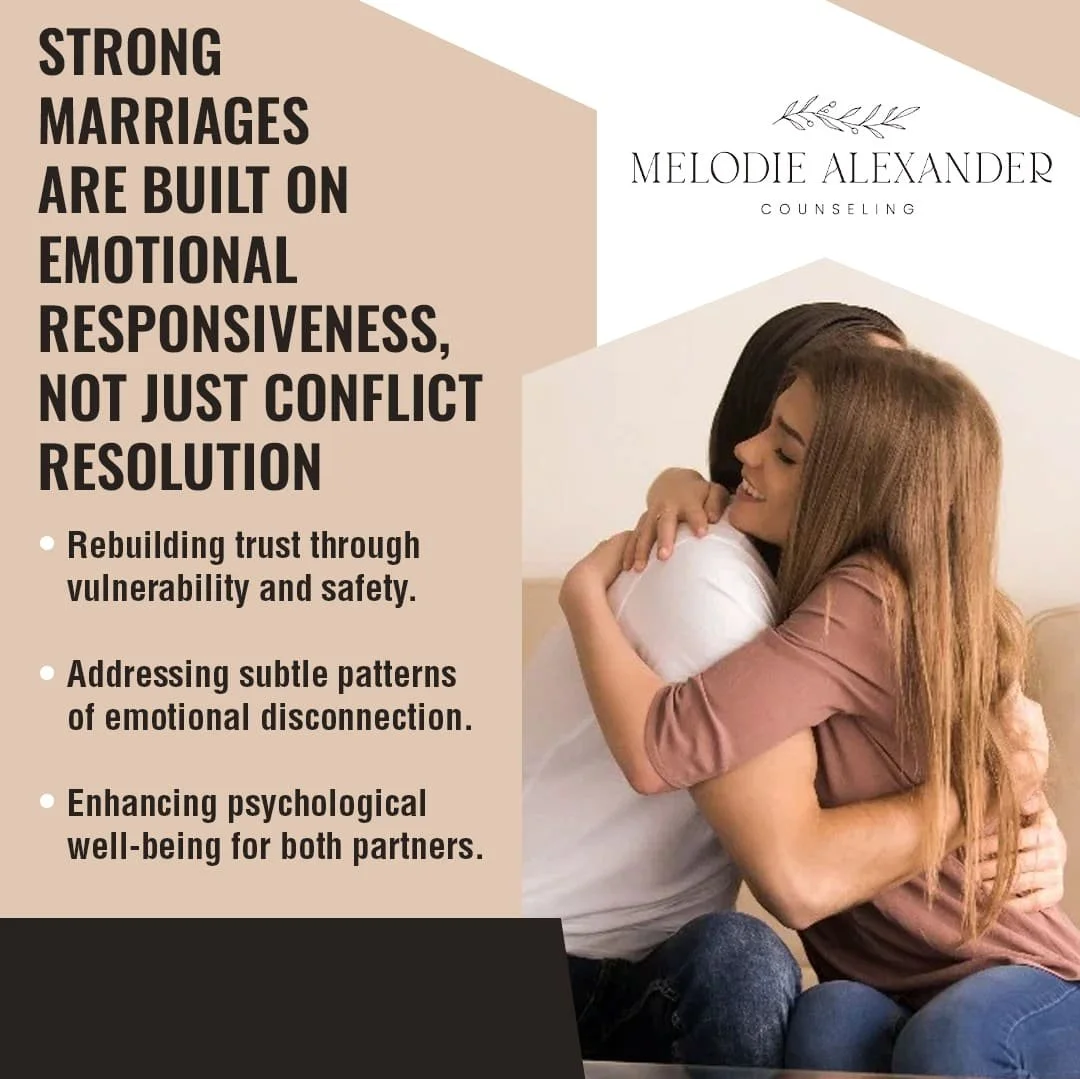
Emotional intimacy is the experience of feeling emotionally known by your partner. It is the sense that your thoughts, fears, and emotions are not only heard but taken seriously. When emotional intimacy is present, you do not feel like you have to carefully manage your words or hide parts of yourself to avoid conflict.
You feel more at ease sharing vulnerable emotions because there is trust that your partner will stay emotionally present. Even when disagreements arise, there is an underlying sense of connection that allows for repair. Emotional intimacy does not eliminate conflict, but it changes how conflict is experienced.
When emotional intimacy is missing, many people begin to doubt themselves. You may replay conversations in your head, wondering if it is worth speaking up. Over time, silence can feel safer than honesty, even though it deepens the emotional gap.
Emotional Intimacy Is About Feeling Safe Enough to Be Real
Many people assume intimacy comes from solving problems quickly or communicating perfectly. In reality, emotional intimacy grows when it feels safe to be emotionally real. This includes moments of uncertainty, sadness, fear, or unmet needs.
If you have learned to minimize your emotions or stay quiet to keep the peace, this is often a response to past moments when vulnerability felt risky. These adaptations develop to protect connection, even though they can later create distance. Being aware of this can reduce self-blame and help you approach change with compassion rather than criticism.
Emotional intimacy begins to rebuild when authenticity feels safer than self-protection. That safety can be learned and strengthened over time.
Emotional Safety: The Ground Beneath Your Relationship
Emotional safety is the foundation that allows emotional intimacy to exist. It is the sense that your emotions will be met with care rather than judgment. Without emotional safety, closeness feels unstable, and partners often pull back to protect themselves.
You may notice emotional safety eroding through subtle interactions. Dismissive responses, defensiveness, sarcasm, or emotional withdrawal during conflict can quietly communicate that sharing feelings is not welcome. Over time, these moments teach one or both partners that it is safer not to reach out.
In marriage counseling, emotional safety is addressed gently. The focus is not on assigning blame, but on understanding how protective behaviors developed and how they may now be interfering with connection.
How Emotional Safety Breaks Down Over Time
Emotional safety often weakens during periods of unresolved conflict or chronic stress. When disagreements repeat without resolution, it can begin to feel pointless or even dangerous to express emotions. You may stop bringing things up because past attempts led to escalation or shutdown.
This withdrawal is rarely about indifference. More often, it reflects a desire to preserve what remains of the relationship by avoiding emotional risk. Therapy helps slow these patterns down, creating space for safety to be rebuilt and emotional connection to re-emerge.
How Emotional Distance Slowly Takes Hold
Emotional disconnection rarely happens suddenly. It often develops during seasons when life demands more than the relationship can comfortably hold. Work stress, parenting responsibilities, health challenges, grief, or major transitions can all contribute to emotional fatigue.
You may still operate effectively as a team while feeling increasingly disconnected emotionally. Conversations become practical and task-focused. Vulnerable topics are avoided as they are thought to be exhausting or unsafe. Even though commitment remains, emotional closeness feels distant.
This gradual drift does not mean the relationship is broken. It often means the emotional bond has been under-supported for too long.
When Conflict Becomes the Only Way to Feel Close
Some couples notice that conflict becomes their primary form of emotional engagement. Arguments repeat, escalate quickly, or end without repair. While conflict may feel destructive, it often reflects an attempt to be seen or heard.
Beneath anger, criticism, or withdrawal is usually a deeper emotional question: Do I matter to you? Will you show up when I need you? Through marriage counseling in Plano, couples begin to understand that conflict is often a signal of unmet emotional needs rather than the core problem. Working with a trained marriage therapist can help slow these patterns down so emotional needs can be seen and responded to with care rather than defensiveness.
Why Emotional Intimacy Matters So Much
Emotional intimacy plays a protective role in marriage. When you feel emotionally connected, stress outside the relationship is less likely to be interpreted as rejection within it. You are better able to trust that distance does not equal abandonment.
Emotionally connected couples tend to recover more quickly after disagreements. There is an underlying belief that reconnection is possible, even after painful moments. This belief strengthens resilience and helps relationships weather difficult seasons.
Trust Is Built in Repeated Emotional Moments
Trust develops through consistent emotional responsiveness. Feeling listened to, validated, and emotionally met over time creates a sense of reliability. These moments accumulate, forming a foundation that supports long-term stability.
When emotional responses are predictable and caring, partners feel safer taking emotional risks. This safety reinforces intimacy and strengthens the bond.
Attachment Patterns and Your Need for Connection
Attachment patterns influence how you respond when a connection feels threatened. You may notice yourself reaching for reassurance, becoming more expressive, or pulling away to regain a sense of control. These responses are learned strategies, not character flaws.
Attachment patterns develop early and are reinforced through life experiences. When emotional closeness feels uncertain, these patterns often become more pronounced.
Making Sense of Emotional Reactions Without Blame
Understanding attachment can be deeply relieving. When emotional reactions are seen as protective responses rather than intentional harm, blame softens. This shift creates space for empathy and new ways of relating.
Marriage counseling services help partners recognize emotional reactions as signals of unmet needs. With guidance, couples learn how to respond in ways that foster safety and closeness rather than escalation.
Rebuilding Emotional Intimacy After Disconnection
Rebuilding intimacy begins with slowing down emotional interactions. Spending more time together may help, but without emotional safety, closeness can still feel elusive. True reconnection requires intentional emotional presence.
Sharing emotions in a way that focuses on personal experience rather than blame increases the likelihood of a supportive response.
Small Shifts That Create Meaningful Change
Acknowledging emotions, validating each other’s experiences, and staying emotionally present during difficult conversations gradually rebuild trust. These changes may feel subtle, yet they significantly alter how safe it feels to connect.
Consistency matters more than intensity. Over time, small moments of emotional responsiveness restore closeness.
How Therapy Helps You Find Your Way Back to Each Other
Therapy provides a structured, compassionate space where emotional exploration feels safer. A trained clinician helps contain intense emotions and guide conversations toward understanding rather than blame.
Sessions focus on identifying negative interaction cycles and creating new emotional experiences. Over time, you and your partner may begin to feel less reactive and more emotionally accessible through the course of marriage therapy.
Learning New Ways to Reach for Each Other
Therapeutic work emphasizes skill-building. Couples learn how to express emotional needs clearly, respond with empathy, and repair disconnection. These skills extend beyond therapy sessions into daily life.
Many couples experience relief when they realize emotional intimacy is not something you either have or lose permanently. It can be rebuilt with support and practice.
When Individual Healing Supports the Relationship
Greater emotional awareness strengthens relational connection. Understanding personal triggers allows for clearer communication and less reactive responses during moments of stress.
Individual growth supports intimacy by reducing emotional overwhelm and increasing emotional regulation.
Balancing Autonomy and Emotional Availability
Healthy intimacy allows space for individuality. Therapy supports maintaining personal boundaries while remaining emotionally available. This balance helps relationships feel secure rather than constraining.
Emotional Intimacy Is a Practice, Not a Finish Line
Emotional intimacy requires ongoing attention. Life will continue to introduce stress and change. Couples who prioritize emotional connection are better equipped to adapt together. Perfection is not required. Repair is what sustains intimacy. When partners know how to come back together after disconnection, emotional closeness becomes more resilient.
Finding Support with a Top Marriage Counselor in Plano
At Melodie Alexander Counseling, emotional intimacy is understood as a skill set that can be strengthened, even after long periods of distance. Care is grounded in attachment-based, trauma-informed approaches that honor emotional experience.
Therapy emphasizes emotional safety, collaboration over blame, and pacing that respects the nervous system. This approach supports meaningful, sustainable change.
If you are longing to feel emotionally close again and are unsure how to get there, marriage counseling in Plano, TX, can provide a supportive space to rebuild emotional safety and restore connection. To learn more about relationship therapy services, contact Melodie Alexander Counseling at (469) 232-7877 or hello@melodiealexandercounseling.com.