
Valentine’s Day and Beyond: How Couples Counseling Builds Intimacy All Year
Valentine’s Day often brings romance into focus. But when the holiday passes and daily life resumes, you may notice the same emotional distance returning. That can feel confusing, discouraging, and even lonely, especially when love is still there.
If this resonates with you, you’re not alone. As a couples therapist, I regularly sit with partners who care deeply for one another and still feel disconnected, misunderstood, or stuck in painful cycles. Intimacy rarely fades because love disappears. More often, it fades when emotional needs go unmet for too long.
At Melodie Alexander Counseling, the focus is on helping you move beyond short-lived gestures and toward emotional closeness that lasts throughout the year.
Key Takeaways
If you feel emotionally distant from your partner, it does not mean love is gone. Intimacy often fades when emotional needs go unspoken or unheard for too long.
Relationship conflict is rarely just about communication or behavior. Most struggles are rooted in unmet attachment needs and a desire to feel safe, valued, and understood.
Couples counseling helps slow down reactive patterns so you can understand what is happening beneath the surface and respond to one another with greater care.
Consistent therapeutic support allows trust to rebuild over time, helping you feel more emotionally connected and better equipped to navigate challenges together.
Lasting intimacy grows through intentional emotional awareness, vulnerability, and guided support, not through one-time conversations or special occasions alone.
Why Intimacy Often Declines in Long-Term Relationships
Long-term intimacy requires more than commitment and shared history. Over time, stress, unresolved conflict, and emotional misattunement can quietly weaken the connection.
Many people who begin couples counseling services share the same fear: “We love each other, but we don’t feel close anymore.” That distance often develops slowly, making it hard to pinpoint when things changed or how to reconnect.
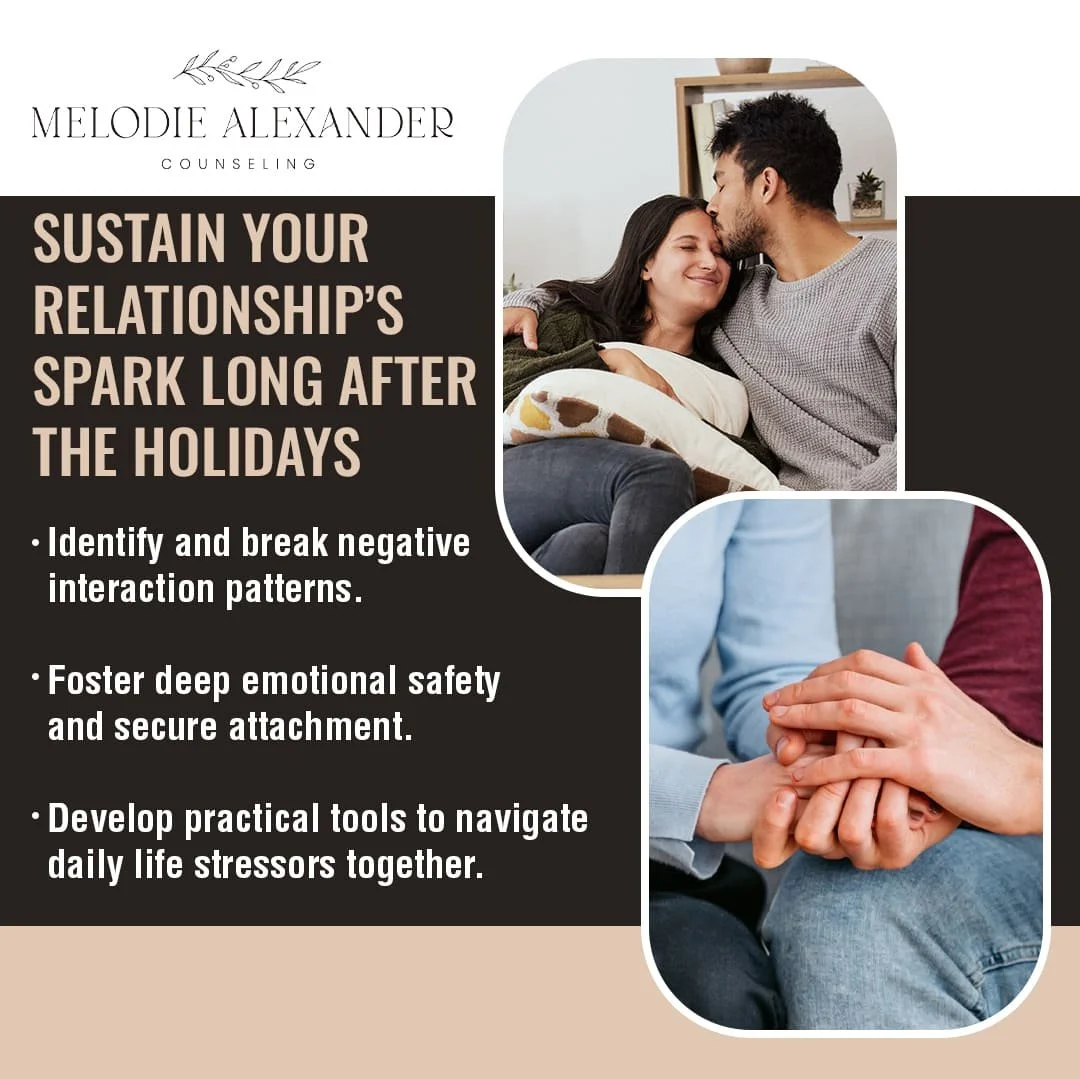
When Stress Interrupts Emotional Connection
When life feels overwhelming, emotional connection is often the first thing to suffer. You may notice that conversations become shorter, patience runs thinner, and moments of warmth feel harder to access. This isn’t because you or your partner stopped caring. It’s because stress shifts the nervous system into survival mode, making emotional availability more difficult.
Over time, these small moments of disconnection add up. You might start to feel alone even when you’re together, or hesitant to reach out because it feels easier not to risk disappointment. Recognizing how stress affects connection is an important first step toward restoring intimacy rather than blaming yourself or your partner.
The Emotional Attachment Beneath Relationship Conflict
It’s common to believe that relationship conflict is about communication or behavior. In reality, most conflict reflects unmet emotional and attachment needs.
As humans, we are wired to seek safety and reassurance from our closest relationships. When that bond feels uncertain, the nervous system reacts, often escalating tension rather than soothing it.
How Attachment Needs Show Up in Therapy
You may find yourself criticizing, shutting down, or pulling away during conflict, even when what you really want is closeness. These reactions often feel automatic and confusing. In therapy, we explore how these behaviors are protective responses to feeling emotionally unsafe, not signs of failure or indifference.
Being aware of your attachment needs helps you make sense of why certain moments feel so intense. When those needs are named and understood, conflict becomes less threatening. You begin to see your partner’s reactions differently, opening the door to empathy and reconnection instead of escalation.
How Emotional Safety Is Rebuilt in Couples Counseling
Rebuilding intimacy requires emotional safety. Without it, even loving conversations can quickly turn into defensiveness or silence.
At Melodie Alexander Counseling, structured couples therapy services are designed to help you feel regulated, understood, and emotionally secure while addressing the patterns that keep you stuck.
Slowing Down Negative Relationship Cycles
When conflict happens quickly, it can feel impossible to understand what just went wrong. Arguments may follow a familiar script, leaving you frustrated and unsure how to stop repeating the same pattern. Slowing the interaction down creates space to see what each of you is feeling and protecting in the moment.
By identifying these cycles together, you gain clarity rather than blame. Instead of asking, “Who’s at fault?” the question becomes, “What’s happening between us right now?” That shift alone can reduce tension and help you feel more grounded during difficult conversations.
From Reactive Patterns to Secure Emotional Bonds
Many people enter therapy believing one partner needs to change. Effective couples counseling shifts the focus to the pattern between you rather than placing responsibility on one person.
When you understand how both of you react under stress, meaningful change becomes possible.
Learning to Express Vulnerability Safely
Many people hold back their deeper emotions because vulnerability has felt risky in the past. You might worry that sharing fear, sadness, or longing will lead to misunderstanding or rejection.
In therapy, you learn how to express these feelings in ways that feel safer and more likely to be received with care.
As vulnerability becomes easier, emotional closeness grows. You may notice that conversations feel more meaningful and less defensive. Over time, this creates a sense of trust that allows both partners to feel emotionally supported rather than guarded.
Why Consistency in Relationship Support Matters
Lasting change does not happen in a single session. It develops through consistent engagement and practice over time.
Regular sessions allow you to apply new skills in real-life situations before old habits return.
Building Emotional Momentum Over Time
Change in relationships rarely happens all at once. Instead, it builds gradually through consistent effort and repeated moments of understanding. Each time you navigate a difficult conversation more gently or repair after conflict more quickly, trust strengthens.
This momentum can be deeply reassuring. You begin to feel more confident in your ability to face challenges together, even when emotions run high. Over time, this sense of teamwork replaces fear and uncertainty with stability and connection.
When One Partner Feels Hesitant About Therapy
Feeling unsure about starting therapy is common. You may worry that the process will involve blame or taking sides.
Working with experienced relationship therapists focuses on understanding the relationship system, not assigning fault.
Progress Is Possible Even With Uneven Readiness
It’s common for one partner to feel more ready for therapy than the other. If this is your experience, it doesn’t mean progress is out of reach. Small changes in how you respond or communicate can shift the dynamic in meaningful ways.
As daily interactions improve, hesitation often softens. Trust grows not through pressure, but through felt change. Many couples find that once emotional safety increases, both partners feel more willing to engage more fully in the process.
Intimacy Beyond Romance and Special Occasions
Intimacy is more than physical closeness or romantic gestures. It includes emotional presence, psychological safety, and mutual support.
Through couples therapy in Plano, you are supported in defining what intimacy truly means to you and how to maintain it intentionally.
Small Changes That Strengthen Relationships
Intimacy often deepens through small, intentional actions rather than grand gestures. Learning how to pause before reacting, acknowledge your partner’s feelings, or repair after a disagreement can create powerful shifts in how you relate to one another.
When you feel supported instead of criticized, emotional closeness grows naturally. These small changes help transform everyday interactions into opportunities for connection rather than sources of tension.
Why Choose Melodie Alexander Counseling
A Calm, Emotionally Safe Space to Be Heard: At Melodie Alexander Counseling, the work begins with emotional safety. Sessions are designed so both partners can speak openly without fear of blame or judgment. Feeling heard and understood creates the foundation for meaningful change, especially when conversations have felt tense or shut down at home.
Attachment-Focused Work That Goes Beneath the Surface: Rather than focusing only on communication techniques, the work centers on recognizing emotional and attachment needs. This approach helps you recognize why certain moments feel so intense and why familiar patterns keep repeating. When those deeper needs are addressed, connection begins to feel more natural and less forced.
A Thoughtful, Structured Approach to Couples Therapy: The therapeutic process is paced intentionally, allowing space to slow things down and make sense of what’s happening between you. Instead of reacting in the moment, you learn how to respond with clarity and care. This structure helps reduce confusion and supports steady progress over time.
Support That Respects Your Individual and Shared Experience: Every relationship has its own story, shaped by personal history, stress, and life transitions. Care is tailored to honor both partners’ experiences while strengthening the bond between you. This balance allows growth to happen without either person feeling overlooked or misunderstood.
Consistency That Builds Lasting Change: Healing and reconnection take time, and consistent support matters. Regular sessions help you practice new ways of relating before old habits return. Over time, this consistency builds trust, not just in the process, but in one another.
Moving Forward With Support
The absence of conflict does not define healthy relationships. They are shaped by how you respond to one another during moments of stress and disconnection.
At Melodie Alexander Counseling, couples therapy in Plano is designed to help you feel emotionally safe, understood, and supported throughout the year. Located in Plano, TX, the practice offers compassionate, grounded care for couples seeking meaningful connection.
If your relationship feels strained or distant, reaching out for support can be a powerful first step.
Thoughtful work with a relationship therapist doesn’t just improve communication; it reshapes how you experience one another every day. You don’t have to navigate this alone. Contact us today at (469) 232-7877 or hello@melodiealexandercounseling.com to learn more.